Vape case, carrying your kit within UK rules
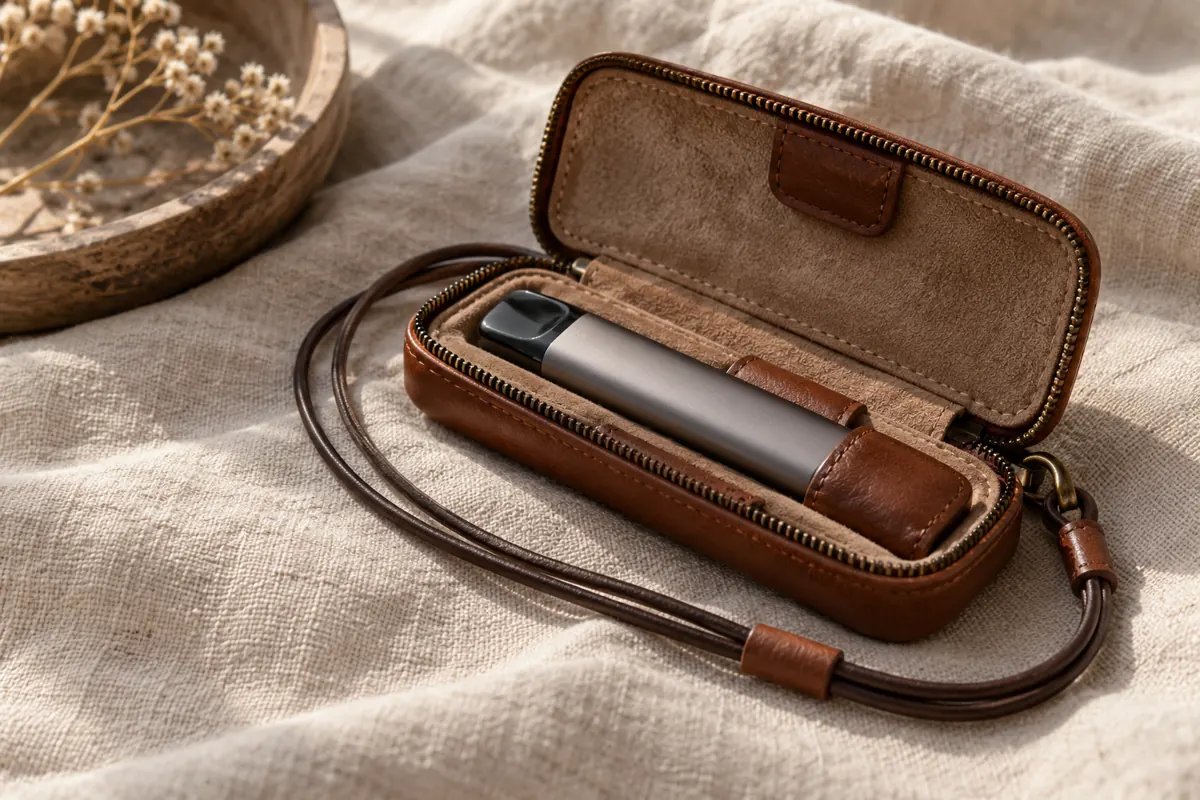
A belt pouch, a lanyard, a sleeve at the bottom of a bag. The vape case has become an everyday accessory, but can you keep one on you wherever you go? At work, on the train, at the airport, the question keeps coming back, and the answers you hear often contradict each other. This guide sets out what UK rules actually cover, and what they leave to others.
Can you carry a vape case wherever you go
On the ground, the UK rules set out in this guide deal with what can be sold, to whom, and where vaping takes place. None of them concerns an adult keeping a device in a vape case. The case itself is simply a carrying accessory, and air travel is the one exception, covered further down.
The confusion comes from no-vaping signs, which many people read as a ban on having the device with them. A sign of that kind is about using the device. Where vaping is not allowed, the kit stays in its case and the question is settled.
What UK rules cover, sale and use rather than carrying
Vaping is not covered by the UK smoke-free law on enclosed places. That single point shapes almost everything else, because it hands the decision to whoever runs the place you are in.
Venues decide where vaping is allowed
Because the smoke-free law does not reach vaping, venues set their own rules. Pubs, restaurants, shops, hotels and stations each decide for themselves, and the signage or the house rules are what count. When in doubt, stepping outside remains the simplest reflex.
The same goes for workplaces. An employer can allow vaping, limit it to certain areas or rule it out entirely through its own policy, and that policy is what applies on its premises.
Sales, age and product rules
Where the law does step in is sale and product. Selling vaping products to under-18s is banned in the UK. Products are framed by the Tobacco and Related Products Regulations 2016, which cap nicotine e-liquid at 20 mg/ml, nicotine refill bottles at 10 ml and tanks and cartridges at 2 ml, and they are notified to the MHRA before being placed on the market.
Carrying your kit on trains, buses and in the car
On public transport, vaping falls under the operator’s own rules, since transport operators set them for their services. Carrying the device in its case is a separate matter from using it. Keep it put away for the journey and check the operator’s conditions if you are unsure.
In your own car, the practical point to watch is heat. A device or cells left in the sun behind a windscreen reach temperatures that lithium-ion cells tolerate poorly. Take your kit with you rather than leaving it in the car in summer.
Flying with a vape case, cabin bag only
Air travel is where the way you pack matters most, because the rules concern how the device and its batteries travel. They are stricter than anything you meet on the ground.
What the rules require
A vape, like any device with a lithium battery, travels in cabin baggage only, never in the hold. Spare batteries follow the same rule, each one in its own case or otherwise protected so that it cannot short circuit.
What is not allowed on board
Vaping on board is not allowed. Switch the device off or lock it before boarding, remove the cells if your kit allows it, and empty or close the tank carefully, because the drop in cabin pressure encourages leaks.
E-liquid bottles
Nicotine refill bottles are already capped at 10 ml by UK product rules, so they stay small. Security screening of liquids is outside the scope of this guide, so check the departure airport’s current information before you pack.
Travelling abroad, check before you go
Some destinations restrict or ban vaping devices outright, and a device can be confiscated on arrival. Others limit sales without banning possession. A case changes nothing about any of that.
Before a trip, look up the official travel advice for the country concerned, or its customs information. UK rules stop at the border, and once you land it is the local law that applies to the device in your bag.
Choosing a vape case for everyday use
Since carrying your kit is rarely the problem, you may as well do it properly. The case you choose should protect the device, keep the batteries secure and stay discreet in places where vaping is not allowed.
Hard case or soft sleeve
A hard case protects a box mod and its tank from knocks in a bag. A silicone or leather sleeve suits a pod, which is lighter and usually carried in a pocket. Either way, pick a closed design so the fire button cannot be pressed by accident.
Lanyard and car holder
A lanyard keeps a pod within reach, which is handy outdoors and less so where vaping is not allowed. A car holder stops the device rolling under a seat, but you still need to take it with you when you leave the car.
What to avoid
A loose spare cell in a pocket, touching keys or coins, is a classic cause of short circuits. A dedicated battery case in plastic or silicone solves the problem, as our guide to the 21700 battery explains in more detail.
Frequently asked questions
Can I vape on a train or at a station in the UK?
It depends on the operator. Vaping is not covered by the smoke-free law, so train companies and station operators set their own rules. Check the signs and the conditions of travel before you vape.
Can my employer stop me vaping at work?
Yes. Employers set their own rules on vaping, and the written policy or staff handbook is the reference to check, including on where the device should be kept during working hours.
Do spare batteries need a special case when flying?
Each spare has to be protected against short circuits. An individual battery case, a plastic box or, failing that, terminals covered with insulating tape all do the job, and a standard battery case is the simplest option.
Can I vape in a hire car?
Check the rental agreement first. It may prohibit vaping and provide for cleaning charges, so read the terms before you set off.
Can I still buy a disposable vape to keep in my case?
Not in the UK. The sale and supply of single-use vapes have been banned since 1 June 2025, so a case today is built around a rechargeable device.
Vape case and UK rules, the essentials
On the ground, the UK rules covered here do not deal with carrying a device. They cover sale, products and, through the choices of venues, employers and transport operators, where you can vape. A vape case only becomes a constraint when you fly, where the device and its batteries travel in the cabin, and in destinations that restrict vaping devices.
A suitable case, protected batteries and a look at local rules before a trip are enough to carry your kit with peace of mind, like any other everyday object. Choose a vape case that fits your device and your routine, and most of the questions answer themselves.
Related reading
Intended for adult readers only. In the United Kingdom, vaping products are not for sale to under-18s, and the nicotine they may contain is highly addictive. This guide is general information, not legal advice or a buying recommendation.